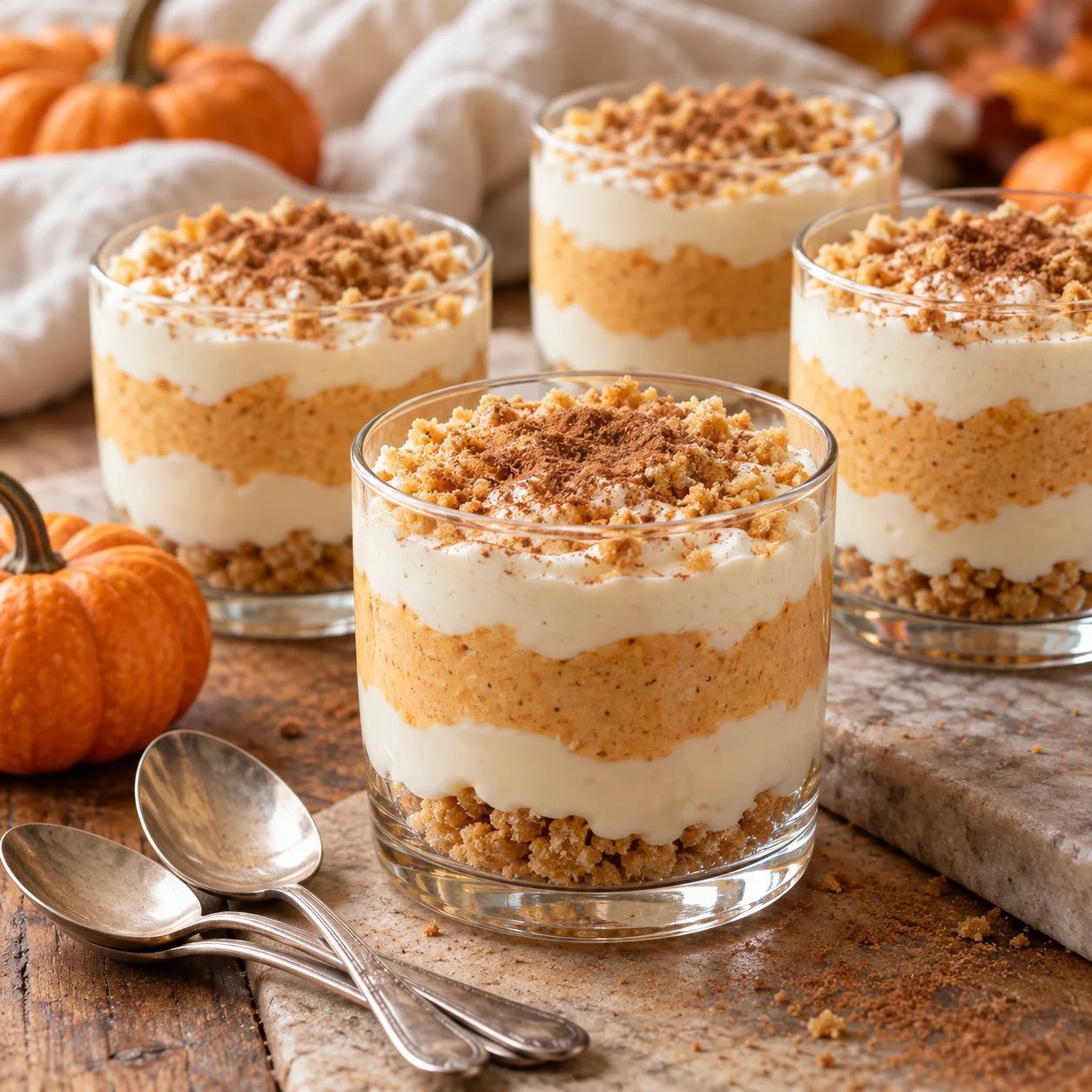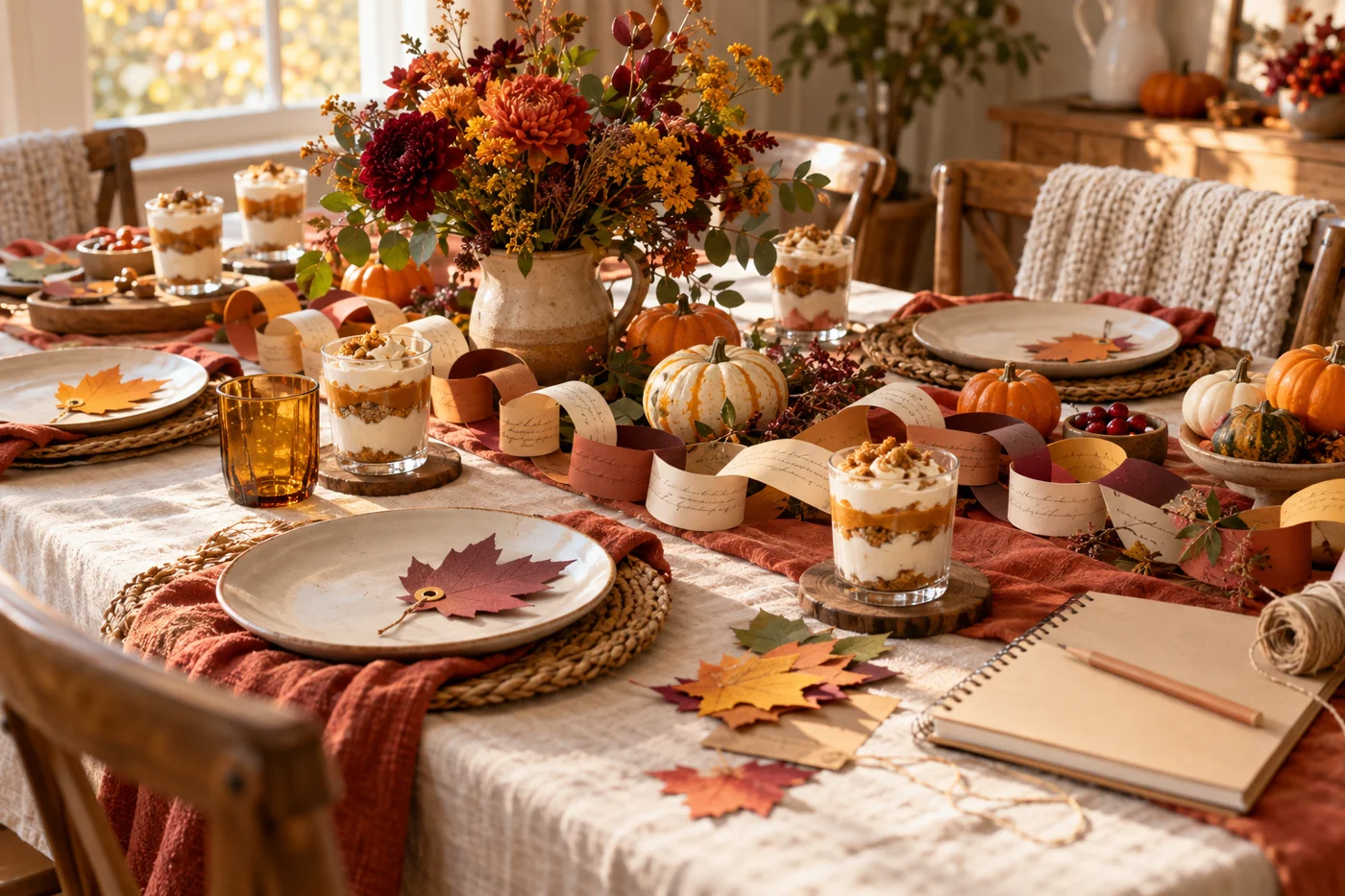
The detail we would protect first at Thanksgiving is the feeling that there is a place for you here. A readable name card, a chair that is easy to reach, a favorite dish someone remembered: these are small ways to turn a meal into a welcome. The table can be simple. The attention can be specific.
1. Ask about the people before deciding the menu
Find out who is coming, what they can comfortably eat, when they need to leave and whether getting into or around the space will be difficult. Ask privately rather than making someone explain their needs to the whole table. A guest who is not cooking can still contribute by choosing music, writing cards or simply coming. If your gathering includes people who do not celebrate Thanksgiving, invite them to a meal without requiring a shared belief or tradition.
2. Choose three things that matter and release the rest
Write down one food, one atmosphere detail and one moment you want to protect. Perhaps that is a familiar family dish, a table where everyone can hear each other and twenty unhurried minutes after dinner. Let those choices guide the work. Use a store-bought dessert if it buys you time with a guest. A second centerpiece is optional; a realistic serving plan is useful. Decide what you will skip before the busy part of the day arrives.
3. Give the food a workable timetable
List which dishes need the oven, which can be made ahead using their recipe’s storage instructions, and which can be served in their existing containers. Assign specific jobs such as “bring the labeled salad at 3” rather than “bring something.” Keep a place in the refrigerator for leftovers. USDA guidance says to refrigerate perishable leftovers within two hours, or one hour when temperatures are above 90°F, and use shallow containers to help food cool. See its leftover handling guide for details.
4. Make one personal detail for each place
A paper leaf napkin ring or a handwritten name card gives you a small, manageable craft. Add one specific thank-you on the back if it feels right: “I loved our long kitchen chat” or “Thank you for showing up when the week got complicated.” Use large lettering and avoid decorations that block conversation. If time runs short, a folded piece of ordinary paper and a thoughtful name still do the job.
5. Make gratitude optional and ordinary
Put a few cards on the table with prompts such as “A small kindness I remember” or “A food memory I love.” Let people write, draw, keep the card private or pass. Do not require a speech. Holidays can hold grief, complicated family histories or a difficult year alongside pleasant moments. A recipe-swap afternoon gives conversation somewhere gentle to begin without asking anyone to perform happiness.
6. Let the memory include the helpers
Take one picture of the table before dinner, one handmade detail and, with permission, a relaxed group picture. Photograph a recipe card only if its writer agrees. Our five-picture Thanksgiving story keeps the plan small enough to finish. After the meal, invite a short shared tidy so the host is not left working while everyone else relaxes. Keep an envelope for the cards you want to save.
If it is a smaller or different Thanksgiving this year
Make a table for the people who are actually there, including just yourself if that is the plan. Choose a meal you enjoy, use a plate you like and make one small connection if you want one: a call, a note or a photo sent privately. There is no requirement to reproduce a larger gathering. A different version can have its own thoughtful details and its own beginning and end.
MAKE ROOM FOR THE GOOD PART
Your simple Thanksgiving plan
A week before
Confirm guests, dietary and access needs, the serving time and the three things that matter most.
Two days before
Check oven and refrigerator space, assign specific contributions and make the paper details.
The day before
Prepare only the dishes your recipes allow ahead, label serving pieces and set out blank gratitude cards.
Before eating
Put drinks within easy reach, keep pathways clear and invite people to sit where they are comfortable.
After the meal
Pack and refrigerate food promptly, share a short tidy and save any keepsake cards with permission.
A LITTLE LIST TO KEEP
Your Thanksgiving checklist
Tick as you plan, or print this guide. Checkmarks last for this page visit.
A couple of things you might be wondering
How can I make Thanksgiving special without cooking everything?
Choose a few dishes that matter to your group and coordinate the rest as a potluck or ready-made meal. Tell each contributor what to bring, when to arrive and what ingredient information you need.
How do I include gratitude without putting people on the spot?
Offer cards people can write on privately, keep, give away or leave blank. Let a specific thank-you stand on its own; nobody needs to explain their whole year.
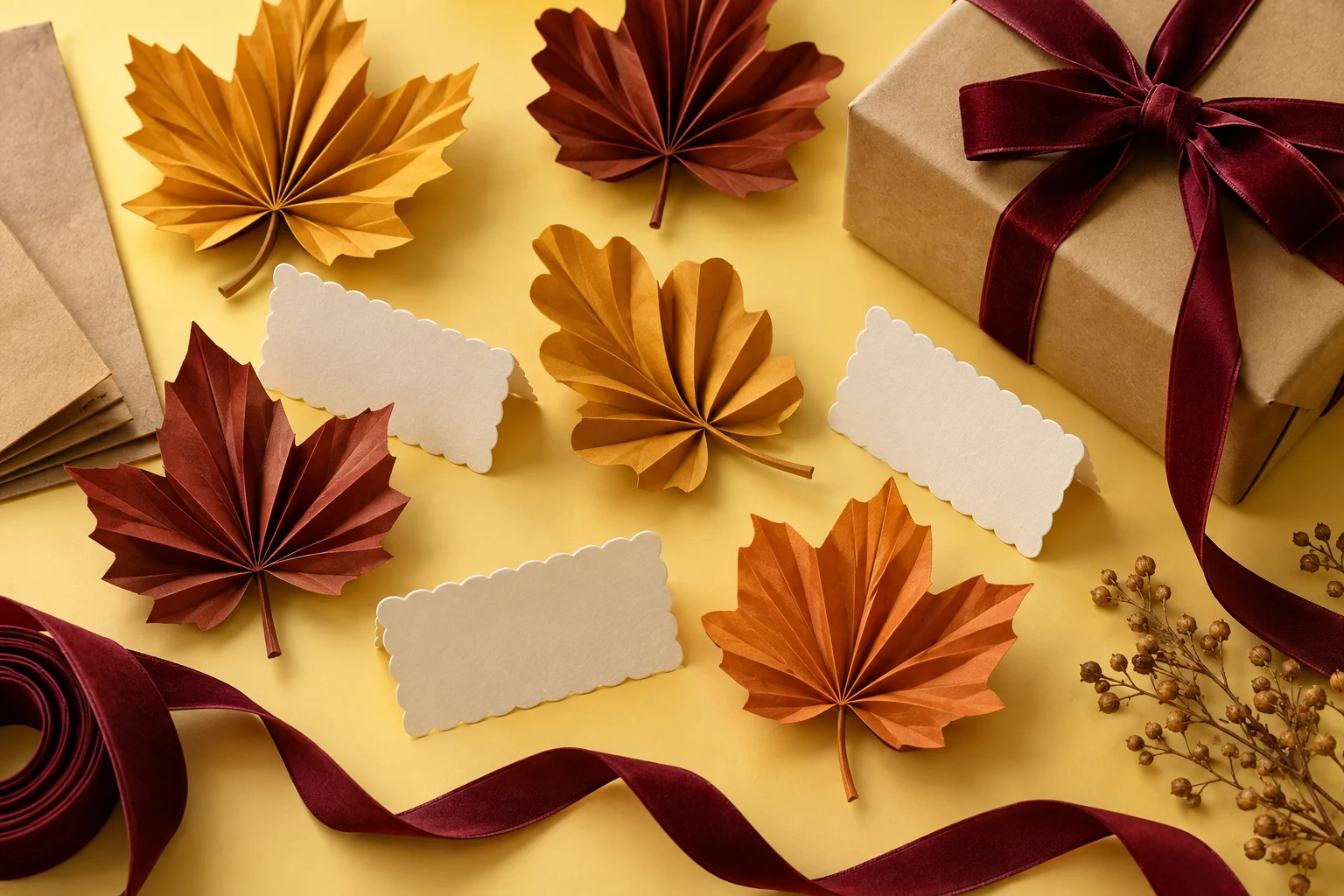
A warm welcome at every place
Let’s make it ↗The related projects are starter guides and have not yet been maker-tested.
Feeling Crafty · feelingcrafty.net/blog/secret-to-a-great-thanksgiving/
← Back to the Crafty Notebook